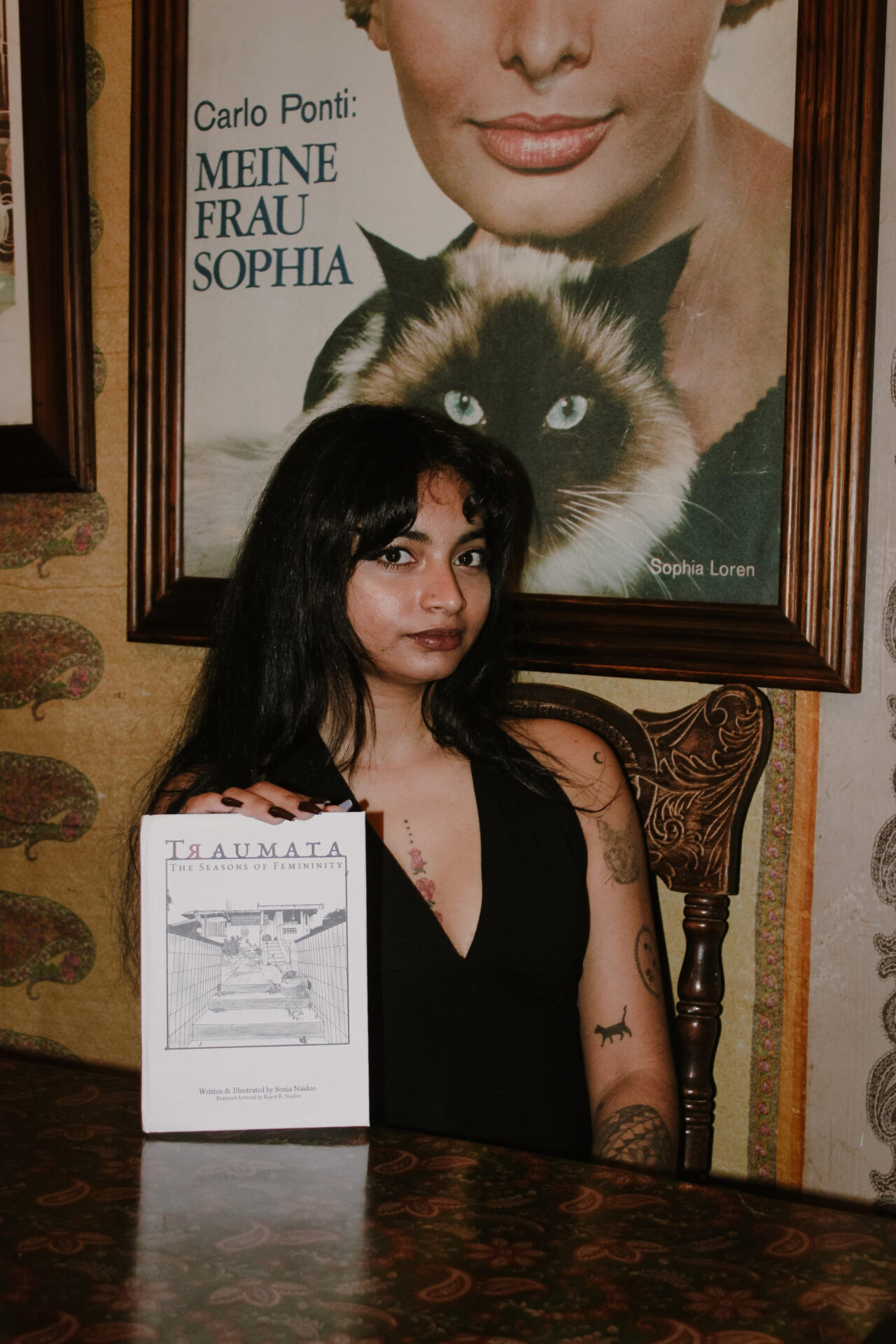
Sonia said dual identity? Tempting. But this is a full-blown rebrand era.
From publishing under Naidoo to stepping into her Jairaj chapter, she’s not just changing surnames, she’s closing one season of survival and opening another of soft, safe love. And at the center of it all? Traumata. A novella written by the survivor in her, illustrated with her own hands and stitched together with memories that still make her cry.
This is the kind of book that doesn’t politely sit on a shelf. It breathes. It bleeds. It calls out predators and holds space for victims, sometimes in the same paragraph. Bold? Absolutely. Necessary? Even more so.
In our sit down with Sonia, she gets real about healing her inner child, marrying the man who taught her what safe love looks like (yes, wifey energy secured), crying over summer chapters, chaotic-in-pj writing rituals and why silence is the most dangerous thing a woman can carry.
Poet. Photographer. Ghostwriter. Artist. Businesswoman. Trauma survivor. Soft but unbreakable.
Main character energy? Confirmed.
Let’s dive in.
FEMME: Your book says Naidoo, your life says Jairaj… are we in your rebrand era or is this your “Hannah Montana” dual identity moment?
Sonia Jairaj: I was tempted to have a dual identity but this is definitely my rebrand era! After my proposal I knew that I had to get my book out there before I got married because Traumata contains stories of the past and the name Naidoo is attached to that. I’m looking forward to seeing Sonia Jairaj on book covers.
Does publishing under Naidoo feel like honouring the girl who started writing at fifteen?
SJ: Yes, it 100% does. Publishing this book also healed my inner child tremendously.
You started writing poetry to cope with anxiety and depression. When did you realise your coping mechanism was actually your calling?
SJ: I only realized this in my early twenties when I decided that I’m going to write a book but I didn’t think it was possible for me to publish my work because a lot of people made fun of my poetry and said things sarcastically to me like ‘go write a poem about that or go write that in your little book.’ (Which I did do by the way and now they’re probably mad). Initially Traumata was going to be a book of poems but in my mid-twenties, when I became a ghost-writer, I realized that hey people are paying me to write their stories, that means I’m good at it. And Red had a story to tell, so that’s when Traumata became a novella and writing became my calling.
You went from writing fanfiction at 15 to having Traumata on Amazon and Barnes & Noble! Be honest, did you have a dramatic “crying in the shower” moment… or are you already mentally drafting your bestseller speech??
SJ: I cried a lot from the time I began writing Traumata until it got published and even now I have my days where it just hits me that my story is out there. I just hope the world will accept it and that it will help someone. And as for my bestseller speech… that was written a long time ago when I was writing my Twilight fanfiction. Perhaps I should publish those stories next…
You’ve been published in anthologies like 320 Days of Sunshine and Poetry is not Dead but does a novella hit differently?
SJ: It truly does hit differently because my novella is deeply personal compared to my published short story and poems.
Tell us, who is Sonia when the pen is down, the manuscript is closed and the
author” aura clocks out?
SJ: I don’t think the author in me ever clocks out because when I’m not writing I’m thinking about writing or reading. That’s why I have so many jobs. I like to balance intellect with creativity, so when I’m not writing I’m drawing or working on my photography skills. I am always keeping my mind and body busy.
Photographer. Poet. Ghostwriter. Artist. Business owner. Are you addicted to creating?
SJ: I’m very much addicted. To the point where I think I have a problem…
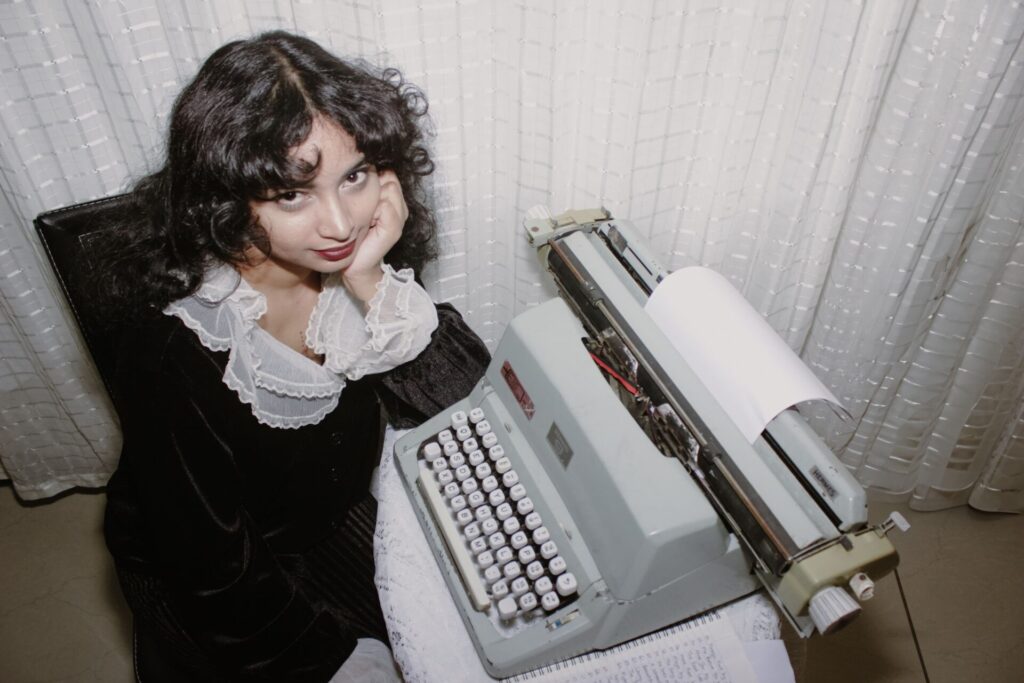
Does photography influence how you write scenes, almost like framing emotional close-ups?
SJ: Photography, funny enough, has assisted me in writing characters better more than sceneries. I’m so used to capturing different people and trying to show their personalities through a picture so this helped me write about my characters traits and personalities as well. I think every creative ability will assist you in any profession!
Writing ritual: candle-lit desk or chaos in pyjamas?
SJ: Chaos in pyjamas (my husband is a witness to this)
If Traumata is your literary baby, which version of Sonia wrote her? The anxious poet, the lover, the survivor, or the businesswoman?
SJ: Definitely the survivor in me wrote Traumata. That’s why it took me seven struggling years to complete it. I was actually shocked when I finally put it together and it was so little pages because I felt like I wrote A LOT throughout the years. Sometimes life is like that too, you think you went through so much but then you look back and realize how small that moment was. Traumata was inspired by my survival so that others may read it and choose to survive too.
Red writes her trauma instead of screaming it. Be honest, how much of Red is you?
SJ: Although it’s fiction, Red is me and I am Red. That is why Traumata is my baby, it’s a raw collection of my feelings throughout my life. Author’s don’t write too much of themselves in books but Traumata is not just any book, it’s my artwork, and my portfolio in a way. It’s MY trauma on a page. It’s all of me and that makes me vulnerable but life is too short to care about things like that.
Red portrays the girl I used to be in my past and the woman I long to be in the future. I used to be unusually silent but that has changed over the years. Writing has helped me so much but talking and screaming your trauma is even more powerful.
One word to describe Red:
SJ: Brave_________.
A line from Traumata that still gives you chills?
SJ: ‘The sounds of the sprinklers came to a stop behind us, signaling the end of the day, but I prayed silently that we could stay there forever. Eating clovers in the field.’
This is the last line of the short story ‘Clovers in the field’ written in Traumata. It’s about Red, her mother and her little brother. This entire story gives me the chills and I cannot read it without crying.
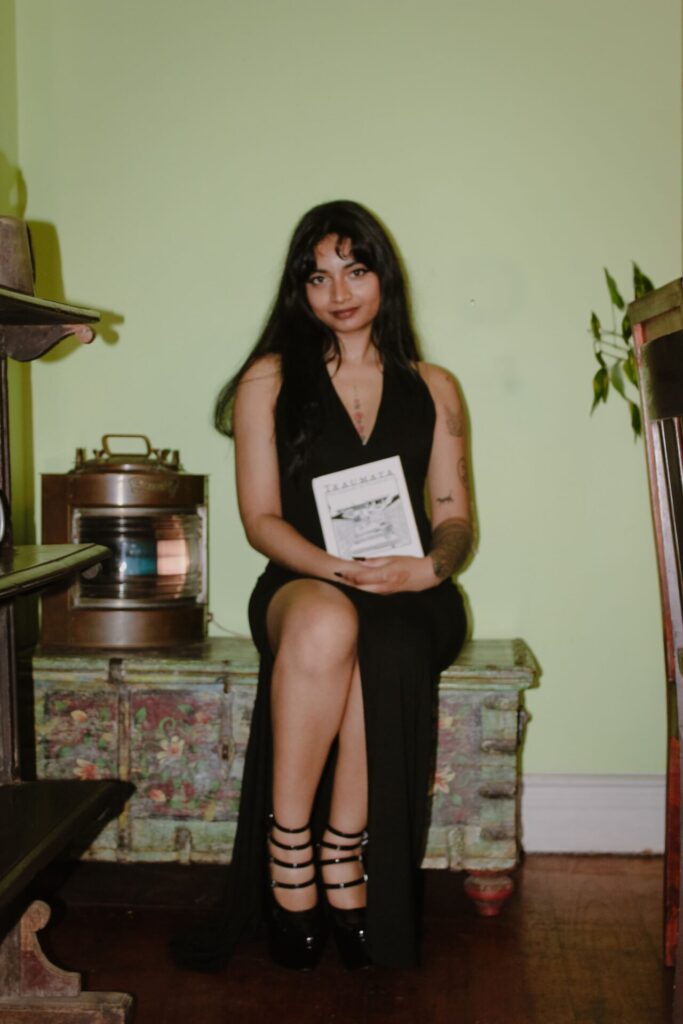
The story is for both the victim and the predator. That’s bold. Were you nervous about that choice?
SJ: I was nervous before publishing it but after publishing and receiving so much good feedback, I felt a lot braver. I did receive one negative feedback where the reader did not understand why the abuser in the story was seen as a bad person at first and then seen as a victim of abuse himself. That’s exactly how confusing it is when it comes to abuse and trauma, the predator has their own trauma too that was left undealt with. I hope that my readers will see that the root of all abuse starts with some kind of trauma. I mean the entire world is healing from trauma right now but we will all try to cover it up and that is not the right way. Covering up your trauma can lead to abuse or even worse…it can lead you to becoming a victim of abuse.
Do you ever fear being “too honest” in your writing, especially in a world that polices women’s emotions?
It used to be my greatest fear to speak out and be honest about my emotions but silence is an even more deadlier killer of women and men too. I will always be honest, I will always write about the things that have hurt us as women over the years, decades, and centuries. Because this is a time where we need to embrace our emotions no matter what gender. When we refuse to embrace our emotions we end up lacking empathy, and that is more terrifying than anything else.
If readers walk away with one feeling after finishing Traumata, what do you want it to be? anger, hope, validation, courage? You can rope in this into your answer:
SJ: I hope that Red’s story will encourage other women to tell their stories too. It is time for women to expose their abusers so that others may be saved.
Red’s life is told in seasons. Which season almost broke you while writing it?
SJ: Summer, the very first season broke me because some of the stories was from my own memories which I heavily fictionalized because my childhood was a complete blur to me. But each time I did remember something I cried. It was really sad but also really funny because I was staying with my husband who was my fiancé then and everytime he came home he found me by my laptop bawling my eyes out.
The relationship between Red and Shekinah feels intimate, almost fragile. Do you believe strangers can sometimes hold our pain better than loved ones?
SJ: When I was growing up I felt so alone and I found comfort in complete strangers on the internet. I even had pen pals in Korea and Mauritius. Two wonderful people who I, sadly, lost contact with but they saved me just by texting me. Shekinah was inspired by them, by all my friends and by a higher deity as well. I truly believe a stranger can hold our pain better than our loved ones.
Without spoilers… should readers trust Shekinah?
SJ: Yes, trust her with all your heart! And if you have any questions about her character feel free to DM me.
You’re a whole wifey! Does being loved safely change the way you write about trauma?
SJ: Yessss, I became a wifey to Jaidan Jairaj on the 27th of December 2025 but way before this day my husband taught me what safe love is. Being loved has actually opened my eyes more to what trauma truly is and I can write about it more clearly now because I know now that the opposite of trauma is true love.
Does your husband read your raw drafts… or does he get the polished version?
SJ: My husband unfortunately suffered with me and read my raw drafts of Traumata over and over again. In the near future I’m sure he would be doing this again, and god help him because it’s another emotional manuscript so he is required to comfort me while simultaneously getting traumatized. When Traumata was published he read the entire book again. I love him so much for this!
You wrote and illustrated this novella yourself. Was that control… therapy… or main character energy?
SJ: If you have any creative abilities you automatically have main character energy! I had to add some of my art to Traumata because it was also art that got me through life and I believe it was the same for my brother, Kaycé Baxter Naidoo, as well, that is why he’s the featured artist. Illustrating the story was so much fun and I’m actually working on a comic book that was inspired by Traumata’s illustrations.
Your younger brother contributed artwork. What does it feel like turning family into collaborators?
SJ: I didn’t just choose my brother as a collaborator because he’s family, I chose him because he’s a talented artist who truly needs to get his work out there. It was great working with him, I mean we are siblings so we did have our good and bad days but it all worked out! My brother also got married in 2025 and around the same time he was drawing for Traumata, it was a hectic and joyous time for all of us but it was really fun. We also have some future projects coming up as well so I’m looking forward to working with him again.
If 15-year-old Sonia could read Traumata, would she cry… or feel powerful?
SJ: Oh, she will most definitely feel powerful!
What would you say to a woman who is still too afraid to tell her story?
SJ: Please take the first step, it’s going to be hard but push yourself. Go to the police, or call a friend who will help you, or write about it, or sing about it, or paint about it, but don’t ever keep silent about it. Because your story can save someone.
Sonia turned trauma into text, silence into storyline and survival into a whole published moment.
Traumata isn’t just a novella, it’s proof that softness can be strong, honesty can be bold and healing can look really good on a woman in her rebrand era.
Consider this your sign: tell the story. Take up space. And if they ever told you to “go write about it”?
Do exactly that.